The Chronicles | Travel, Perspective & The Geography of Experience
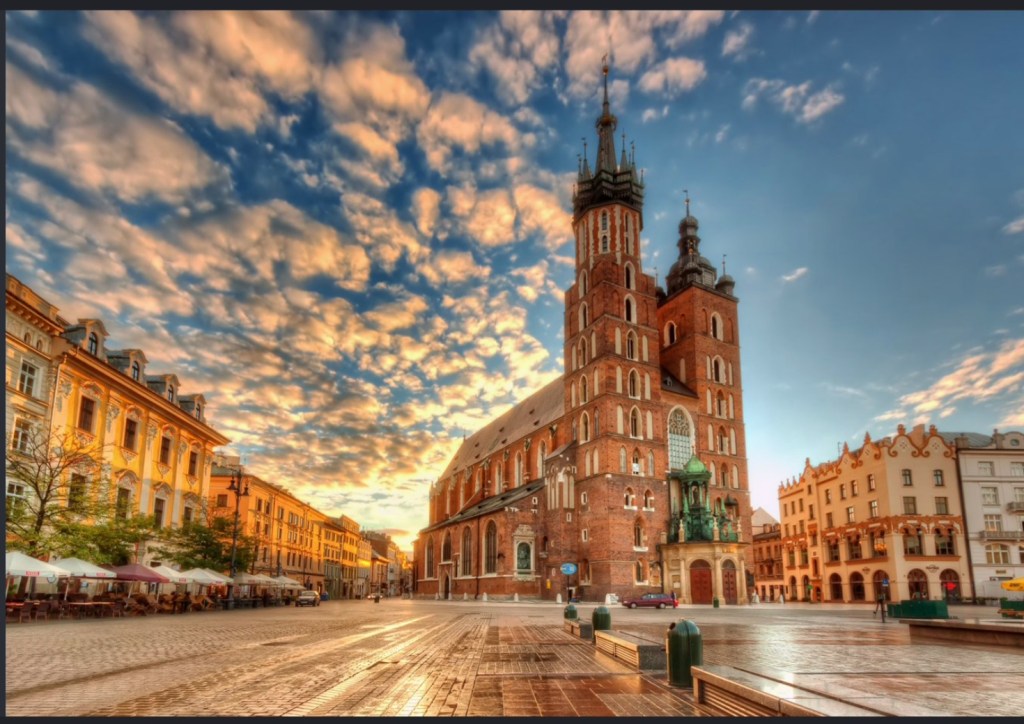
Something happened today that made me think about how much my frame of reference has changed.
On November 7, 2026, a gunman opened fire in Kraków’s Main Market Square in Poland. Six people were killed, and fifteen others were injured, according to authorities.
A terrible tragedy.But this particular news story affected me differently.
I was standing in that very marketplace just four months ago.
In July, I traveled to Poland as part of the Auschwitz Legacy Fellowship. My experience took me through places whose histories I had studied, taught, and discussed for years.
Kraków was one of those places.
And today, when I read about the shooting, I didn’t simply see the name of a European city in a headline.
I saw a place I had actually visited.
That distinction made me think.
When Geography Becomes Experience
For much of our lives, our frames of reference are shaped by the places we know.
Our neighborhoods. Our communities. Our states. Our country.
When something happens in a familiar location, we have a point of connection. We can picture the setting. We understand something about its geography and perhaps its culture.International news can feel different.
We read about events in countries we have never visited, cities whose streets we have never walked, and communities whose daily lives we know primarily through photographs and news coverage.
We may feel sympathy, concern, or outrage.But the places themselves can remain abstract.
Then something changes.You travel.You walk through a marketplace. You explore a neighborhood. You encounter people whose lives are unfolding independently of your own.
And suddenly, a location that once existed primarily in your imagination becomes part of your experience.
The world hasn’t become smaller geographically.
Your frame of reference has become larger.
From National to International I’ve always valued learning about places beyond my immediate surroundings.
As a history educator, I understand the importance of examining events within their historical, geographic, and cultural contexts.
But there is a difference between studying a place and experiencing it.Reading about Kraków is not the same as visiting Kraków.
Looking at photographs of a historic marketplace is not the same as standing in it.
And hearing about violence in a distant city feels different when that city is no longer entirely distant to you.Today, my mind went back to July.
Four months.
That’s all that separated my visit from this tragedy.
I thought about how ordinary it seemed to be in that marketplace during my travels and how ordinary a Saturday afternoon must have seemed to the people who entered it today.
Until it wasn’t.
The Responsibility of Perspective
My visit to Poland was not simply a vacation.Through the Auschwitz Legacy Fellowship, I spent time examining some of the most difficult chapters of human history.
We explored questions about hatred, responsibility, historical memory, and the consequences of choices made by individuals and institutions.
I returned home with experiences that deepened my understanding of the importance of context.
Now, another event in Poland has reminded me that our relationship with history and current events is never entirely static.
Experiences change how we interpret information.
They add dimensions to our understanding.They challenge us to see beyond our familiar boundaries.
And sometimes, they make a news story unexpectedly personal.
I want to be careful about that word, personal.
My having visited Kraków does not make this tragedy more important than another tragedy somewhere I have never been.
Nor does it make my experience comparable to the suffering of the victims, their families, or the people who call Kraków home.
Their loss is not my story.
But my changed understanding of that place is.
And it has reminded me that we should not need a personal connection to recognize the humanity of people living thousands of miles away.
Travel simply makes that connection harder to overlook.
A Different Kind of Souvenir
We often think of souvenirs as things we bring home.
A photograph. A keepsake. Something purchased along the way.
But some of the most lasting things we bring back from traveling aren’t objects.
They’re perspectives.They’re new points of reference.They’re the ability to read a headline and recognize that the people and places involved are not abstractions.
Today, Kraków appeared in the news for a heartbreaking reason.
And I found myself thinking about a marketplace I visited in July, people whose lives have been forever changed, and the way our experiences shape what we notice.
I cannot undo what happened.
But I can allow it to deepen my understanding of the world and my responsibility to remain curious, informed, and compassionate about events beyond my own borders.
Perhaps that’s one of the greatest gifts of travel.
You leave home to experience the world.
You return home, and the world never feels quite as far away again.
Come curious. Leave thinking.
—Sources- “City of Kraków: Official November 7 shooting report” (https://krakow.pl/aktualnosci/345151,29,komunikat,strzaly_na_rynku_glownym__na_miejscu_sa_sluzby.html)- “CBS News: Kraków Main Market Square shooting” (https://www.cbsnews.com/news/shooting-main-market-square-krakow-poland/)


Leave a Reply