The Raised Eyebrow | Black Women in America, History & Political Power
Well, here we are again.
Another election. Another set of numbers. Another round of people marveling at the political participation of Black women.
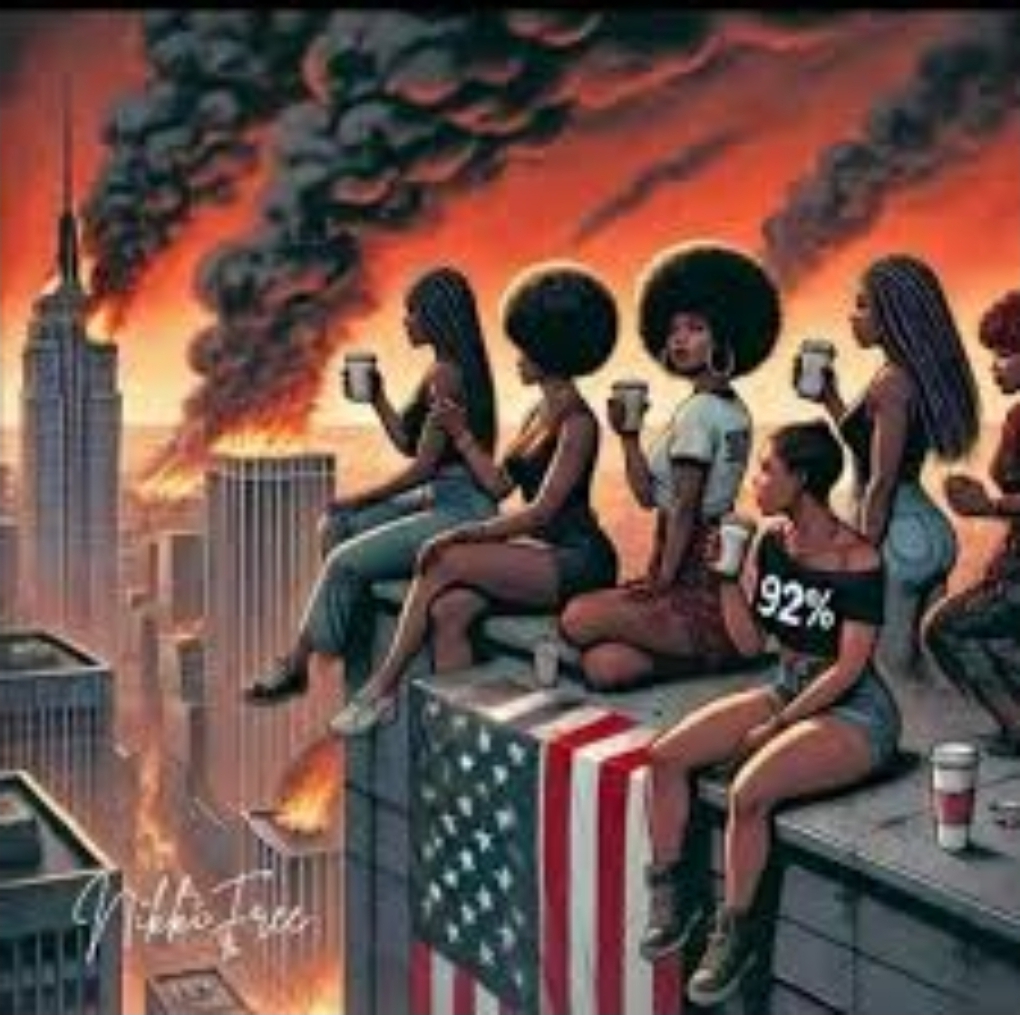
In the November 3, 2026, midterm elections, approximately 90% of Black voters supported Democratic candidates for the U.S. House. Among Black women, that figure reached 93%, according to national voter polling.
Ninety-three percent.
Let that sit for a moment.
And once again, the familiar commentary begins. Black women showed up. Black women understood the assignment. Black women helped make the difference.
Lovely.
But I have a question.
When does everyone else start understanding the assignment?
A Little Historical Context
Black women’s political activism did not begin with the latest election cycle.
Long before political analysts discovered the usefulness of exit polls, Black women were organizing communities, challenging discriminatory laws, educating voters, and demanding recognition in a democracy that frequently refused to recognize them.
The Nineteenth Amendment was ratified in 1920. Yet, for many Black women in the South, the promise of voting remained obstructed by poll taxes, literacy tests, intimidation, and violence.
Consider Fannie Lou Hamer.
In 1964, she helped challenge Mississippi’s segregated Democratic Party through the Mississippi Freedom Democratic Party. She wasn’t simply asking to participate. She was demanding that a political institution claiming to represent democracy actually practice it.
Think about that.
More than sixty years ago, a Black woman challenged the very party that expected Black political support.
Apparently, accountability has a long history.
The Numbers Are Impressive. But What Do They Mean?
Ninety-three percent is an extraordinary level of support for one political party.
But a voting percentage does not tell us everything.
It doesn’t explain every voter’s motivation. It doesn’t tell us whether someone voted enthusiastically, reluctantly, strategically, or simply because the alternatives were unacceptable.
And it certainly doesn’t establish that Black women think alike.
We don’t.
Black women differ in age, income, geography, religion, ideology, professional experience, and political priorities.
Some are Democrats. Some are Republicans. Some are independents. Some are deeply frustrated with the entire political system.
So perhaps we should stop treating Black women as a single political personality.
Political consistency does not mean political uniformity.
Nor should consistency be confused with unconditional loyalty.
Representation Matters. So Do Results.
The 2026 election produced an extraordinary milestone.
Keisha Lance Bottoms was elected governor of Georgia, becoming the first Black woman ever elected governor of an American state.
That deserves recognition.
For generations, Black women helped build political movements while being excluded from some of the most powerful positions those movements created.
Seeing a Black woman break that particular barrier matters.
But representation alone cannot be the final measure of progress.
According to the Centers for Disease Control and Prevention, the 2024 maternal mortality rate for non-Hispanic Black women was 44.8 deaths per 100,000 live births, compared with 14.2 for non-Hispanic White women.
Those figures should make every policymaker uncomfortable.
Because while representation is meaningful, the outcomes of public policy matter just as much.
I want to know what happens after the election celebrations end.
What happens to health care?
What happens to economic opportunity?
What happens to educational access, voting rights, and the everyday circumstances that affect women’s lives?
And who is held accountable when promised improvements never materialize?
The Problem With Being Everybody’s Backbone
There is something deeply troubling about repeatedly celebrating a group of people for carrying a responsibility that should be shared.
We praise Black women for being strong.
For being resilient.
For organizing.
For persevering.
For keeping institutions, families, communities, and political movements functioning.
And some of that recognition is deserved.
But strength should not become an excuse for neglect.
Resilience should not be interpreted as an unlimited capacity to absorb disappointment.
And political participation should not be rewarded with little more than another round of applause.
I am not suggesting that Black women should stop participating in democracy. Quite the opposite.
I am suggesting that our participation deserves to be taken seriously after the ballots have been counted.
That means asking difficult questions of elected officials, regardless of party affiliation.
It means distinguishing campaign rhetoric from legislative accomplishments.
And it means understanding that a vote is not a lifetime contract.
So Who Has Our Back?
Perhaps the better question is not why Black women continue to participate so consistently.
Perhaps the question is why our participation is still treated as remarkable rather than as political power that deserves serious consideration.
Black women are not simply supporting characters in the American democratic story.
We have helped write it.
We have challenged it.
We have fought to expand its promises.
And we have repeatedly demanded that the country live up to the principles it professes to believe.
So yes, acknowledge the numbers.
Celebrate the historic victories.
Recognize the organizing and political leadership.
But then do something more difficult.
Evaluate what comes next.
Because I am far less interested in hearing how Black women saved another election than I am in discovering whether the people elected intend to address the concerns of the women who helped put them in office.
And I don’t think that is an unreasonable expectation.
But then again, I’ve always had a tendency to ask questions that make people uncomfortable.
Come curious. Leave thinking. And occasionally, raise an eyebrow.


Leave a Reply